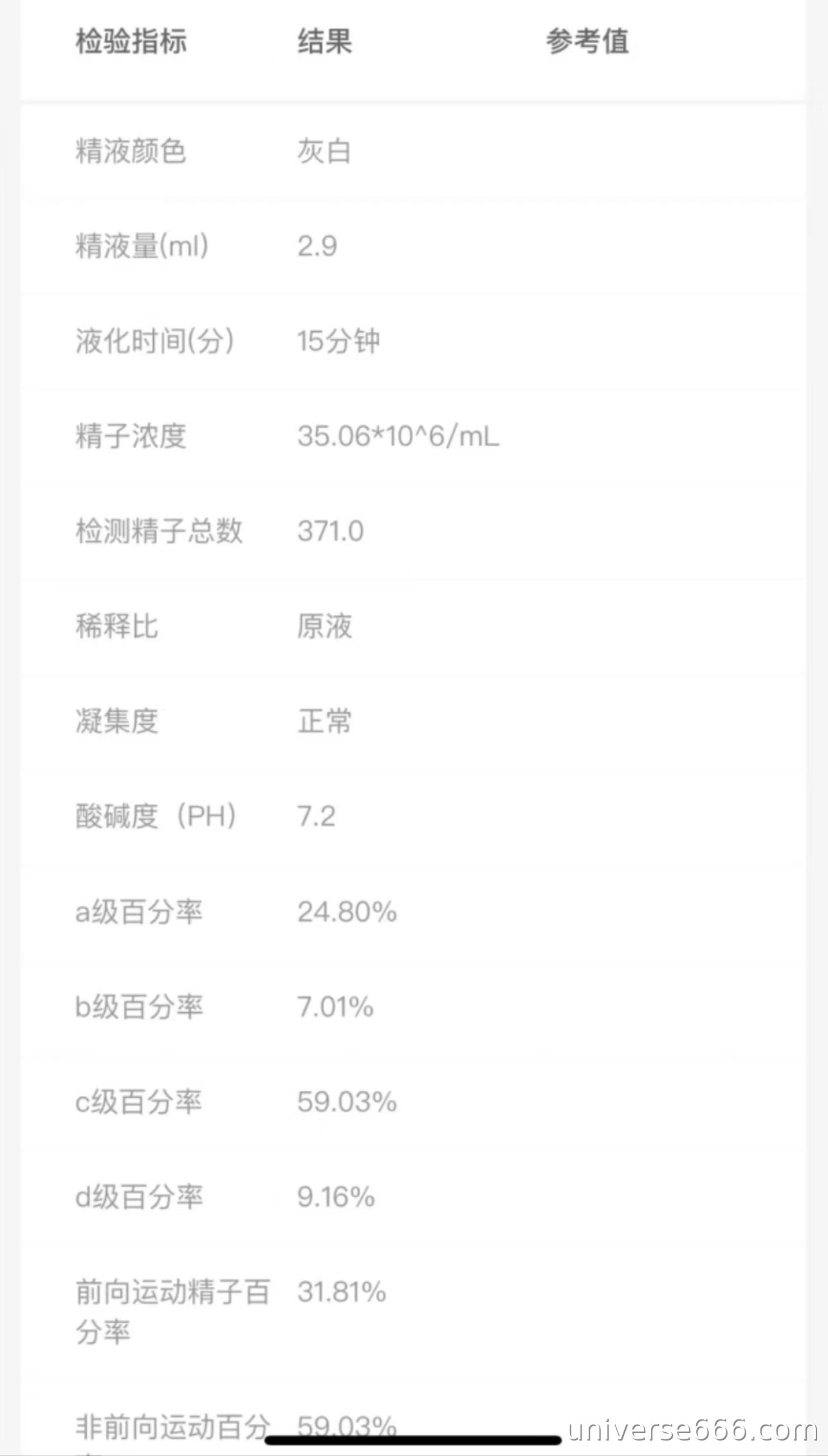
Semen analysis is the first step in male fertility assessment, and the core is three indicators:Sperm concentration, progressive motility, and normal morphology rate (teratospermia rate). Once these three are understood, one can preliminarily judge the level of semen quality and whether further examination or assisted reproduction processes such as ICSI/IMSI are needed. Based on the WHO 6th edition reference standards, this article explains each item clearly, helping prospective parents no longer feel lost when receiving the report.
I. First establish a premise: the reference value is a probability line, not a pass line
The lower reference limits given in the WHO Laboratory Manual for the Examination and Processing of Human Semen, 6th edition (published in 2021), are derived from statistics of fertile male populations (the 5th percentile). This implies two points:Being below the reference value does not mean infertility, and being above it does not mean pregnancy is guaranteed. The report is a probabilistic reference; whether treatment is needed and which assisted reproduction method to use are comprehensively judged by the physician based on both partners conditions.
II. Concentration: how many sperm per milliliter of semen
The lower reference limit for sperm concentration is 16 million/mL, and the lower reference limit for total sperm count per ejaculate is 39 million. Concentration reflects the quantity of raw material and is a basic item in assessing male fertility.
It should be noted that concentration is affected by various temporary factors: too short or too long abstinence, incomplete sampling, recent fever, staying up late, smoking, alcohol, etc., any of which may cause noticeable fluctuations. Mild deviation from the reference value usually suggests a re-check first; when significantly low, the physician will arrange further tests such as sex hormones and scrotal ultrasound to find the cause.
III. Motility: focus on the progressive motility column
Motility indicators are divided into two categories:Total motility (progressive + non-progressive) lower reference limit 42%, progressive motility (PR) lower reference limit 30%. Only progressively motile sperm have the ability to actively swim from the cervix toward the fallopian tubes, so this column deserves more attention than total motility.
When progressive motility is markedly low, the difficulty for sperm to reach and combine with the egg on their own increases, and the physician may consider the choice of subsequent fertilization method accordingly; however, this requires comprehensive evaluation together with multiple factors such as the woman age and egg condition, rather than looking at a single number.
IV. Teratospermia rate: the most easily misinterpreted item
The lower reference limit for normal morphology rate is 4%. That is to say, a reported teratospermia rate of 96% looks alarming, but it is actually still within the reference range - this is a normal phenomenon of morphological testing, and there is no need for excessive anxiety.
Another key clarification:Teratospermia rate is not equal to fetal malformation. Morphological scoring only reflects sperm appearance (head, tail morphology, etc.) and has no direct correspondence with fetal structural abnormalities. The morphology rate mainly affects the efficiency of natural conception and conventional in vitro fertilization, not the health of offspring.
V. Quick reference table of the three indicators reference values
| Indicator | WHO 6th edition lower reference limit (2021) | Common misinterpretation |
|---|---|---|
| Sperm concentration | 16 million/mL | Judging infertility from a single low result; ignoring abstinence days and temporary factors |
| Progressive motility (PR) | 30% (total motility 42%) | Only looking at total motility, ignoring the progressive motility ratio |
| Normal morphology rate | 4% (teratospermia rate of 96% is within the reference range) | Equating teratospermia rate directly with fetal malformation risk |
VI. Under what circumstances does one proceed to ICSI/IMSI?
Whether to use ICSI (intracytoplasmic sperm injection) or IMSI (injection after sperm selection under high magnification) is decided by the physician together withmultiple reports, previous fertilization history, and the woman conditionsbased on comprehensive judgment. Common situations taken into consideration include:
- Severe oligozoospermia, asthenozoospermia, or high teratospermia rate, where conventional IVF lacks a sufficient fertilization basis;
- Conventional fertilization failure or markedly low fertilization rate occurred in previous assisted cycles;
- Difficulty in sperm retrieval or obstructive azoospermia, requiring surgical sperm extraction (TESA/PESA) to obtain sperm.
The difference in principle between the two is: ICSI directly injects a single sperm into the egg under a microscope; IMSI uses higher magnification and allows further screening of sperm morphology before injection, mostly used in cases of severe sperm abnormalities. Which specific protocol to adopt,should be based on the opinion of the practicing physician after an in-person evaluation, and any process choice does not constitute a promise of results.
VII. What if one report is abnormal? Re-check and sampling key points
Semen parameters fluctuate considerably within the same individual,so a first abnormal result is not advised to be concluded from a single test, and usually a re-check after an interval of 2-3 weeks is needed before a comprehensive judgment. Before sampling, note: abstain 2-7 days; avoid fever, staying up late, heavy drinking, and saunas before the test; after collection keep the sample near body temperature and deliver it as soon as possible (generally within 1 hour). After a cold or fever, it is recommended to rest and recover for 1-2 weeks before testing, to avoid temporary fluctuations interfering with the judgment.
Frequently asked questions
Generally 2-7 days. Too short abstinence affects concentration, while too long may lower motility and morphology; the two re-checks should maintain similar abstinence days.
The lower reference limit for normal morphology rate is 4%, so looking at the teratospermia rate number alone is of limited meaning and requires combined evaluation with concentration and progressive motility.
No. Sperm morphological scoring reflects sperm appearance and has no direct correspondence with fetal structural abnormalities.
Not necessarily. The fertilization method is comprehensively decided by the physician based on both partners reports and previous conditions; mild abnormalities usually allow first evaluating the conventional fertilization path.
Conclusion
The key points for reading a semen analysis report can be summarized in three sentences:Look at the three indicators together: concentration shows quantity, progressive motility shows ability, and do not worry about the morphology rate; for a single abnormal result, re-check first and do not jump to conclusions; whether further processes such as ICSI/IMSI are needed should be comprehensively judged by a practicing physician after an in-person evaluation. Reading the report accurately is the most effective first step for men to participate in fertility management.
This article is for science popularization and information sharing only, and does not constitute medical advice. Assisted reproduction plans must be formulated by the attending physician based on the individual's physical condition; individual outcomes vary and are subject to formal evaluation at a licensed medical institution.